
Explore personalized GLP-1 weight loss in Alexandria, VA. Learn how GLP-1 medications work, eligibility, side effects, and what to expect.
Medically Supervised
Open 24 Hours
Alexandria, VA 22312
5-Star Rated
$100
OFF All Services
Free Consultation
Find Out What's
Really Happening
No obligation. Personalized answers.
Confidential · No cost · Same-day appointments available
Trustindex verifies that the original source of the review is Google. I’ve struggled with weight loss for years, but this program I got from Addis Health and Wellness Center Clinic finally worked for me. The guidance, accountability, and personalized plan made all the difference. I lost total 30 pounds in last 6 months. I recommend this clinic anyone who struggles with weight loss.Posted on GoogleTrustindex verifies that the original source of the review is Google. I had an excellent experience with Seble for my PRP treatments. She was extremely knowledgeable, attentive, and took the time to explain everything clearly. The facility was very clean and professional, which made me feel comfortable throughout the process. I’ve already seen great, noticeable results and couldn’t be happier. I highly recommend Seble for anyone considering PRP services.Posted on GoogleTrustindex verifies that the original source of the review is Google. The best PRP hair treatment in the DMV area I highly recommended Addis Health and Wellness Center. Great experience with Seble she is very comprehensive. She listen a lot and level of caring ,willing to provide detailed suggestions. And I have amazing result. Thank you !!!Posted on GoogleTrustindex verifies that the original source of the review is Google. I came to Addis feeling physically drained. From the moment I walked in, I was struck by the calming and peaceful atmosphere. The nurse was incredibly kind, knowledgeable, compassionate, and attentive to my needs. During my Nad+ sessions, she took the time to genuinely listen to my concerns, and their personalized approach made all the difference. Each infusion setion was amazing, I felt heard and truly valued here. The results have been beyond my expectations. After just a few weeks, I feel a significant improvement in energy and mental clarity. I am sleeping better, have more energy, and can notice my skin elasticity improving. I highly recommend Addis Health Health and Wellness Center.Posted on GoogleTrustindex verifies that the original source of the review is Google. I saw Sebele for weight loss and it’s been a great experience. She has been knowledgeable and understanding throughout my weight loss journey. Her encouragement keeps me motivated. I feel better have more energy and have gained confidence in myself.Posted on GoogleTrustindex verifies that the original source of the review is Google. I highly recommend Addis Health and Wellness Center! Over the past 6 months, I’ve lost 30 pounds, and it has been life-changing. The approach was simple, sustainable, and didn’t feel like a punishment. What stood out to me was how tailored it felt to my needs, great support, and motivation. Not only have I lost weight, but I’ve gained so much energy and confidence. It’s not just about the number on the scale—it’s about feeling good in my own skin again. If you’re looking for a solution that works without crazy restrictions, this is it. Thank you for helping me achieve my goals!Posted on GoogleTrustindex verifies that the original source of the review is Google. I can’t say enough wonderful things about Hana and the weight loss program! She was absolutely amazing—always so responsive, supportive, and genuinely lovely to work with. Her professionalism and warmth made the entire journey feel personalized and encouraging. Thanks to her guidance, I felt confident and well cared for every step of the way. I highly recommend this program to anyone looking for a compassionate, knowledgeable partner in their weight loss journey!”Posted on GoogleTrustindex verifies that the original source of the review is Google. I highly recommend Sebele, as she is so dedicated and committed to help anyone with health issues. She helped me with IV treatment for my long COVID condition. She took time to listen and worked closely with me to ensure the treatment is what I needed. She went over my blood lab results to find out how she could help me in any other areas of health. I highly recommend her to anyone who is ready to create their own health. She will be with you every step of the way..Posted on GoogleTrustindex verifies that the original source of the review is Google. Hair loss runs in the family and the PRP for hair has helped a lot. Great results after few sessions. Moreover, each time I am at the clinic, I receive an amazing service, all my doubts and questions are answered, and I feel in great hands. I like the location and plenty of parking. 🤗Posted on GoogleTrustindex verifies that the original source of the review is Google. Sebele has helped me since her opening of her business. She has set up a program for me to maintain a healthier lifestyle .I have had the IV therapy with vitamins and B12 shots. Sebele is a dedicated professional, who is compassionate to help people create their own health and well-being. She teams up with her patients to set them up for success. Her ultimate goal is to partner with you as you grow and incorporate your new health habits. I highly recommend Sebele for those of you who are ready to live a healthy lifestyle.Verified by TrustindexTrustindex verified badge is the Universal Symbol of Trust. Only the greatest companies can get the verified badge who has a review score above 4.5, based on customer reviews over the past 12 months. Read more
The Addis Difference
Losing weight is not always as simple as eating less or exercising more. Appetite, eating patterns, medications, health conditions, and other factors can make weight management difficult even when you are making a real effort. A GLP-1 weight loss program can provide medical support for appropriate patients while also addressing the habits that matter for long-term weight management. At Addis Health & Wellness Center in Alexandria, VA, the process starts with a personalized assessment rather than a one-size-fits-all prescription. Depending on your health history and goals, your provider may discuss GLP-1-based medication options, nutrition, physical activity, and ongoing follow-up. The goal is to help you work toward weight loss while building a practical plan you can maintain. A consultation is the best place to determine whether this approach is appropriate for you.
A GLP-1 weight loss program is a medically guided approach to weight management that may include medications affecting the glucagon-like peptide-1 (GLP-1) pathway.
GLP-1 is a hormone involved in appetite, food intake, digestion, and blood sugar regulation. Medications that act on this pathway can influence appetite and help some appropriate patients manage how much they eat.
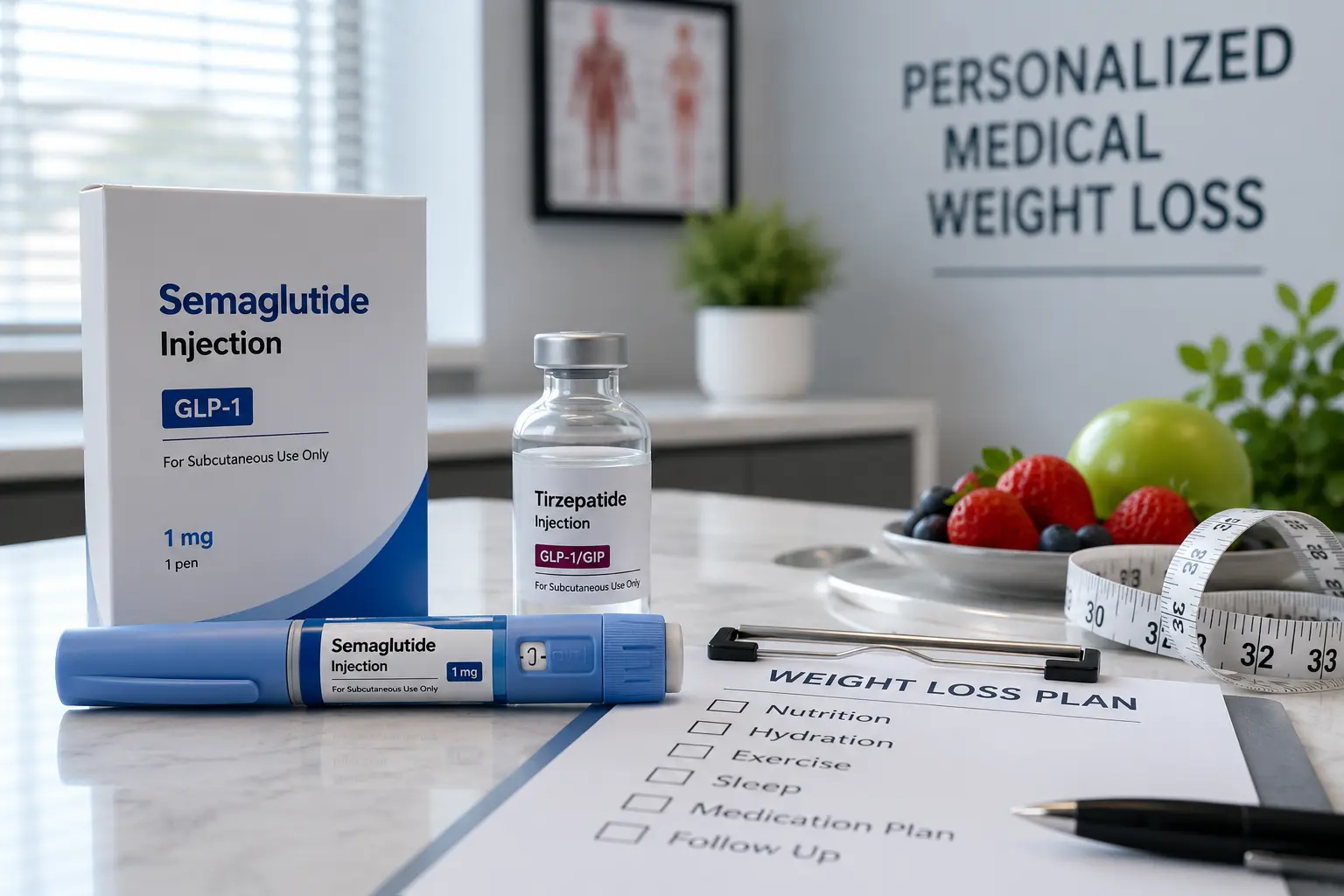
Some medications used in modern medical weight management target GLP-1 alone, while others act on more than one hormone pathway. For example, semaglutide is a GLP-1 receptor agonist, while tirzepatide acts on both GIP and GLP-1 receptors.
The medication is only one part of a complete weight-management plan.
A thoughtful program may also address:
For appropriate patients, this approach can provide more structure than trying another diet without medical guidance.
At Addis Health & Wellness Center, your treatment plan should be based on your individual situation, not simply on the fact that a particular medication is popular.
GLP-1-based medications work through hormone pathways involved in appetite and metabolism.
GLP-1 receptor agonists can activate GLP-1 receptors, which are involved in several processes that affect blood glucose and appetite. These medications can slow gastric emptying and may reduce food intake, helping some patients feel fuller or manage hunger differently.
The exact medication, dose, schedule, and treatment plan depend on the medication prescribed and your individual circumstances.
Two medications you may hear about when researching medical weight loss are semaglutide and tirzepatide.
Semaglutide works primarily through the GLP-1 receptor. Tirzepatide activates both GIP and GLP-1 receptors.
They are different medications, and one is not automatically the right choice for every patient.
Your provider can consider your medical history, goals, current medications, potential risks, and treatment response when discussing available options.
If you are specifically comparing these approaches, our semaglutide injections in Alexandria, VA page can provide more information about that treatment option.
Patients interested in tirzepatide can also discuss whether tirzepatide weight loss may be appropriate as part of their overall treatment plan.
A GLP-1 medication should not be viewed as a replacement for healthy habits.
For FDA-approved weight-management medications such as Wegovy and Zepbound, treatment is used alongside reduced-calorie eating and increased physical activity. The broader goal is weight management rather than simply taking medication for a short period.
This is why ongoing support can matter. Your provider can help monitor how you respond, discuss side effects, and adjust the plan when appropriate.
Every patient’s experience is different, but a medically supervised program may offer several potential benefits.
One reason GLP-1-based medications are used in weight management is their effect on appetite and food intake.
Some patients may find that hunger becomes easier to manage or that they feel satisfied with less food. This can make it easier to follow a reduced-calorie eating plan.
Individual responses vary, however, and appetite changes should not be treated as guaranteed.
For appropriate patients, FDA-approved medications that act on GLP-1 pathways can support weight reduction when combined with nutrition and physical activity.
How much weight a person loses varies. Factors such as medication response, dose, health history, eating habits, activity, and consistency can all play a role.
A responsible weight-management program focuses on your individual progress rather than promising a specific number on the scale.
If you have repeatedly tried to lose weight without reaching or maintaining your goals, medical guidance may provide another layer of support.
Instead of relying on a generic plan, your provider can evaluate your situation and discuss whether medication, nutrition changes, physical activity, or other strategies may be useful.
Weight loss is only one part of the process.
Maintaining progress can require continued attention to eating patterns, activity, appetite, and other factors that influence weight. Depending on your circumstances, your provider may discuss longer-term treatment and maintenance rather than viewing weight loss as a one-time goal.
A GLP-1 medication is not appropriate for everyone.
Eligibility depends on the specific medication and its approved indications, as well as your personal health history.
For example, FDA-approved medications such as Wegovy and Zepbound have specific criteria for chronic weight management in adults. These medications are generally intended for adults with obesity, or for adults with overweight and certain weight-related health conditions, depending on the medication.
Your provider should determine whether a medication-based weight-management approach is appropriate for you.
During a consultation, you may discuss:
The purpose of this evaluation is not to decide that everyone needs medication. It is to determine whether medication is a reasonable option for your particular situation.
Different medications have different contraindications and precautions.
For example, semaglutide products approved for chronic weight management carry a contraindication for people with a personal or family history of medullary thyroid carcinoma (MTC) or people with Multiple Endocrine Neoplasia syndrome type 2 (MEN 2). Tirzepatide products approved for weight management have the same major contraindication.
Other medical conditions and medications may also affect whether treatment is appropriate.
Pregnancy is an important consideration as well. Weight-loss medications are not intended for weight loss during pregnancy, and your healthcare provider should know if you are pregnant, planning a pregnancy, or could become pregnant.
Always provide a complete and accurate medical history before starting treatment.
Your first visit begins with a conversation about your goals.
You can explain what you have tried in the past, what challenges you are facing now, and what you hope to accomplish.
This is also your opportunity to ask questions about medication options, side effects, dosing, nutrition, follow-up, and cost.
Your provider will review information that may affect treatment decisions.
This may include your medical history, medications, weight-related health factors, previous treatment experiences, and other relevant information.
The goal is to determine whether a GLP-1-based approach makes sense for you and whether there are safety considerations that need to be addressed first.
If treatment is appropriate, your provider can explain the medication being considered, how it is administered, how dosing works, and what you should watch for.
Some weight-management medications are administered by injection, while treatment details vary by medication.
Do not change your prescribed dose or medication schedule without speaking with your healthcare provider.
Medication can be one part of the plan, but eating and activity habits remain important.
Your provider may discuss practical ways to support nutrition, physical activity, and other lifestyle factors that contribute to weight management.
The focus should be on changes that are realistic for your daily life rather than extreme short-term restrictions.
Follow-up helps your provider understand how you are responding.
Appointments may provide an opportunity to review:
Ongoing care is particularly important because the right treatment plan may change as your needs change.
Side effects depend on the medication being used.
Gastrointestinal symptoms are common with several GLP-1-based and related medications. These can include nausea, vomiting, diarrhea, constipation, abdominal discomfort, indigestion, and other digestive symptoms.
Some patients experience symptoms more strongly when beginning treatment or when a dose is increased.
Other potential risks vary by medication and can include gallbladder problems, pancreatitis, kidney-related complications, hypoglycemia in certain situations, and serious allergic reactions.
This does not mean these complications will happen to you. It means they are important considerations when deciding whether a medication is appropriate.
Your provider should review the medication’s current prescribing information with you and explain when you should seek medical attention.
If you experience severe or concerning symptoms during treatment, contact your healthcare provider promptly.
There is no universal treatment length.
Some patients may use medication as part of longer-term weight management, while treatment decisions can change based on response, tolerability, health goals, and medical circumstances.
It is also important to distinguish between losing weight and maintaining weight loss. If medication is stopped, appetite and weight can change, and some people may regain weight.
For this reason, long-term planning should be part of the conversation from the beginning.
Your provider can help you understand what ongoing treatment, follow-up, and maintenance may look like for your situation.
Weight management needs to work within your actual life.
For someone living in Old Town Alexandria, working around Del Ray, or commuting through Northern Virginia, appointments and treatment need to fit around work, family responsibilities, meals, exercise, and everyday routines.
That is one reason local, ongoing care can be useful. A weight-management plan is not only about what happens during the initial consultation. Follow-up, medication questions, side-effect management, and adjustments can all become part of the process.
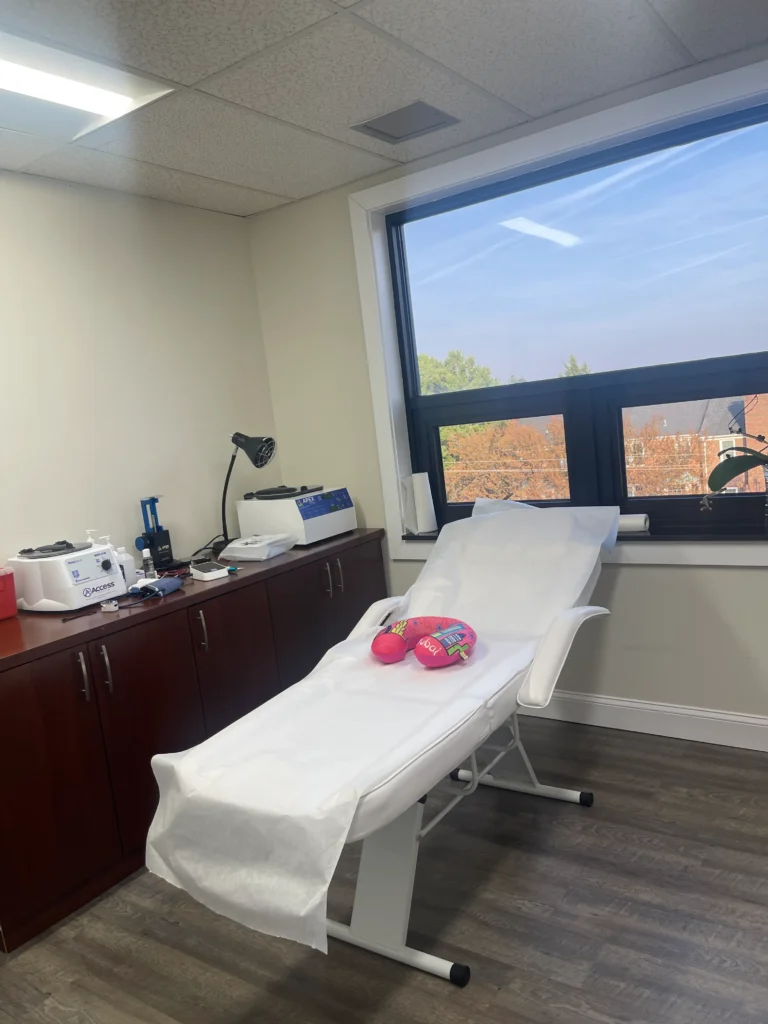
Addis Health & Wellness Center provides a local setting in Alexandria for patients who want to discuss medically guided weight-management options in person.
If you are searching for a GLP-1 weight loss program in Alexandria, VA, you do not need to decide on a specific medication before your first visit. A consultation can help you understand the options available and whether one of them fits your health history and goals.
The goal is to make weight management more informed and practical—not to promise a particular outcome.
Two people can have very different experiences with weight loss.
Age, medical history, medications, appetite, eating patterns, activity, sleep, and other factors can influence weight management. Those differences matter when considering prescription medication.
Personalized care also provides an opportunity to look beyond the medication itself.
A complete plan may include nutrition guidance, physical activity, behavioral changes, medication management, and ongoing monitoring. The right combination depends on the patient.
This is especially important when medications have meaningful contraindications and potential side effects.
Rather than choosing a medication based only on what is popular online, talk with a qualified healthcare professional who can review your individual circumstances.
A GLP-1 weight loss program can be viewed as one part of a larger medical weight-management strategy.
For some patients, medication may be an important tool for appetite and weight management. For others, lifestyle support or a different treatment approach may be more appropriate.
A broader medical weight loss approach can bring these pieces together and help you understand which options may fit your goals.
The objective is not simply to start treatment. It is to create a plan that can be monitored, adjusted, and evaluated over time.
If you are unsure where to begin, a medical weight-loss consultation can be a useful first step.
No. GLP-1 medications have specific indications, contraindications, and precautions. Your healthcare provider should review your medical history, current medications, health goals, and other factors before determining whether treatment is appropriate.
Depending on the patient’s situation and the medication’s approved indications, treatment may involve medications such as semaglutide or tirzepatide. They are not identical: semaglutide acts primarily through the GLP-1 receptor, while tirzepatide acts on both GIP and GLP-1 receptors.
There is no reliable amount that can be promised to an individual patient. Clinical results vary, and your response can depend on the medication, dose, health history, nutrition, activity, and other factors.
The schedule depends on the specific medication. Several FDA-approved weight-management medications in this category are administered once weekly, but your provider should give you medication-specific instructions.
Response varies. Some people notice changes in appetite before seeing significant changes in weight. Your provider can monitor your progress and help set realistic expectations rather than promising a specific timeline.
Yes. Prescription weight-management medications are generally used as part of a broader approach that includes nutrition and physical activity. Medication is not intended to replace healthy lifestyle habits.
Digestive symptoms such as nausea, diarrhea, vomiting, constipation, and abdominal discomfort are among the common side effects associated with several medications in this category. The exact side-effect profile depends on the medication prescribed.
It depends on the medications involved. Some combinations may increase risks or may not be recommended. Give your provider a complete list of prescription medications, over-the-counter medicines, and supplements before beginning treatment.
Treatment length varies. Some people may require longer-term medical management, while others may have their plan changed based on treatment response, tolerability, and health goals. Your provider can discuss ongoing treatment and maintenance with you.
Cost depends on the medication, treatment plan, consultation and follow-up needs, and other factors. Ask Addis Health & Wellness Center about current pricing and what is included before beginning treatment.
If you are considering a GLP-1 weight loss program in Alexandria, VA, you do not have to figure out the right medication or approach on your own.
Start with a personalized consultation at Addis Health & Wellness Center to discuss your weight-management goals, health history, treatment options, and questions. Your provider can help determine whether a GLP-1-based approach may be appropriate and explain what ongoing care could look like.
Schedule a consultation and take the first step toward losing weight and supporting healthier long-term weight management.
$100 Off All Services
Stop guessing. Start with a free consultation at our Alexandria clinic — and let lab results and medical evaluation guide your program for once.
Medically supervised · Personalized plans · Alexandria, Arlington, Fairfax, Springfield
get in touch
Book Your Free
Consultation Today
Fill out the form and our team will reach out to schedule your free consultation. In-person or by phone — whichever works for you.
Fax: 703 520 5373
info@addishealthva.com
Address
6601 Little River Tnpk, Suite 420
Alexandria, VA 22312
Hours
Open 24 Hours (Monday - Sunday)
✦ $100 Off All Services
Mention this offer when you book your free consultation. Valid for all services at our Alexandria clinic. New patients welcome.
Confidential · No cost · Same-day appointments available