Explore weight loss injections in Alexandria, VA with personalized medical guidance, treatment planning, follow-up, and support for long-term weight management.
Medically Supervised
Open 24 Hours
Alexandria, VA 22312
5-Star Rated
$100
OFF All Services
Free Consultation
Find Out What's
Really Happening
No obligation. Personalized answers.
Confidential · No cost · Same-day appointments available
Trustindex verifies that the original source of the review is Google. I’ve struggled with weight loss for years, but this program I got from Addis Health and Wellness Center Clinic finally worked for me. The guidance, accountability, and personalized plan made all the difference. I lost total 30 pounds in last 6 months. I recommend this clinic anyone who struggles with weight loss.Posted on GoogleTrustindex verifies that the original source of the review is Google. I had an excellent experience with Seble for my PRP treatments. She was extremely knowledgeable, attentive, and took the time to explain everything clearly. The facility was very clean and professional, which made me feel comfortable throughout the process. I’ve already seen great, noticeable results and couldn’t be happier. I highly recommend Seble for anyone considering PRP services.Posted on GoogleTrustindex verifies that the original source of the review is Google. The best PRP hair treatment in the DMV area I highly recommended Addis Health and Wellness Center. Great experience with Seble she is very comprehensive. She listen a lot and level of caring ,willing to provide detailed suggestions. And I have amazing result. Thank you !!!Posted on GoogleTrustindex verifies that the original source of the review is Google. I came to Addis feeling physically drained. From the moment I walked in, I was struck by the calming and peaceful atmosphere. The nurse was incredibly kind, knowledgeable, compassionate, and attentive to my needs. During my Nad+ sessions, she took the time to genuinely listen to my concerns, and their personalized approach made all the difference. Each infusion setion was amazing, I felt heard and truly valued here. The results have been beyond my expectations. After just a few weeks, I feel a significant improvement in energy and mental clarity. I am sleeping better, have more energy, and can notice my skin elasticity improving. I highly recommend Addis Health Health and Wellness Center.Posted on GoogleTrustindex verifies that the original source of the review is Google. I saw Sebele for weight loss and it’s been a great experience. She has been knowledgeable and understanding throughout my weight loss journey. Her encouragement keeps me motivated. I feel better have more energy and have gained confidence in myself.Posted on GoogleTrustindex verifies that the original source of the review is Google. I highly recommend Addis Health and Wellness Center! Over the past 6 months, I’ve lost 30 pounds, and it has been life-changing. The approach was simple, sustainable, and didn’t feel like a punishment. What stood out to me was how tailored it felt to my needs, great support, and motivation. Not only have I lost weight, but I’ve gained so much energy and confidence. It’s not just about the number on the scale—it’s about feeling good in my own skin again. If you’re looking for a solution that works without crazy restrictions, this is it. Thank you for helping me achieve my goals!Posted on GoogleTrustindex verifies that the original source of the review is Google. I can’t say enough wonderful things about Hana and the weight loss program! She was absolutely amazing—always so responsive, supportive, and genuinely lovely to work with. Her professionalism and warmth made the entire journey feel personalized and encouraging. Thanks to her guidance, I felt confident and well cared for every step of the way. I highly recommend this program to anyone looking for a compassionate, knowledgeable partner in their weight loss journey!”Posted on GoogleTrustindex verifies that the original source of the review is Google. I highly recommend Sebele, as she is so dedicated and committed to help anyone with health issues. She helped me with IV treatment for my long COVID condition. She took time to listen and worked closely with me to ensure the treatment is what I needed. She went over my blood lab results to find out how she could help me in any other areas of health. I highly recommend her to anyone who is ready to create their own health. She will be with you every step of the way..Posted on GoogleTrustindex verifies that the original source of the review is Google. Hair loss runs in the family and the PRP for hair has helped a lot. Great results after few sessions. Moreover, each time I am at the clinic, I receive an amazing service, all my doubts and questions are answered, and I feel in great hands. I like the location and plenty of parking. 🤗Posted on GoogleTrustindex verifies that the original source of the review is Google. Sebele has helped me since her opening of her business. She has set up a program for me to maintain a healthier lifestyle .I have had the IV therapy with vitamins and B12 shots. Sebele is a dedicated professional, who is compassionate to help people create their own health and well-being. She teams up with her patients to set them up for success. Her ultimate goal is to partner with you as you grow and incorporate your new health habits. I highly recommend Sebele for those of you who are ready to live a healthy lifestyle.Verified by TrustindexTrustindex verified badge is the Universal Symbol of Trust. Only the greatest companies can get the verified badge who has a review score above 4.5, based on customer reviews over the past 12 months. Read more
The Addis Difference
Losing weight can be difficult when changes to diet and exercise alone do not seem to provide the progress you are working toward. Weight loss injections may be one option for appropriate patients who want additional medical support with appetite and weight management. At Addis Health & Wellness Center in Alexandria, VA, the process starts with understanding your health, goals, medical history, and individual needs rather than choosing a treatment based on weight alone. Depending on your situation, a provider may discuss injectable medications and other medical weight loss options that may help support your goals. Your plan can also include nutrition and lifestyle guidance, follow-up, and adjustments over time. If you are considering weight loss injections, a personalized consultation can help you understand your options and what may be appropriate for you.
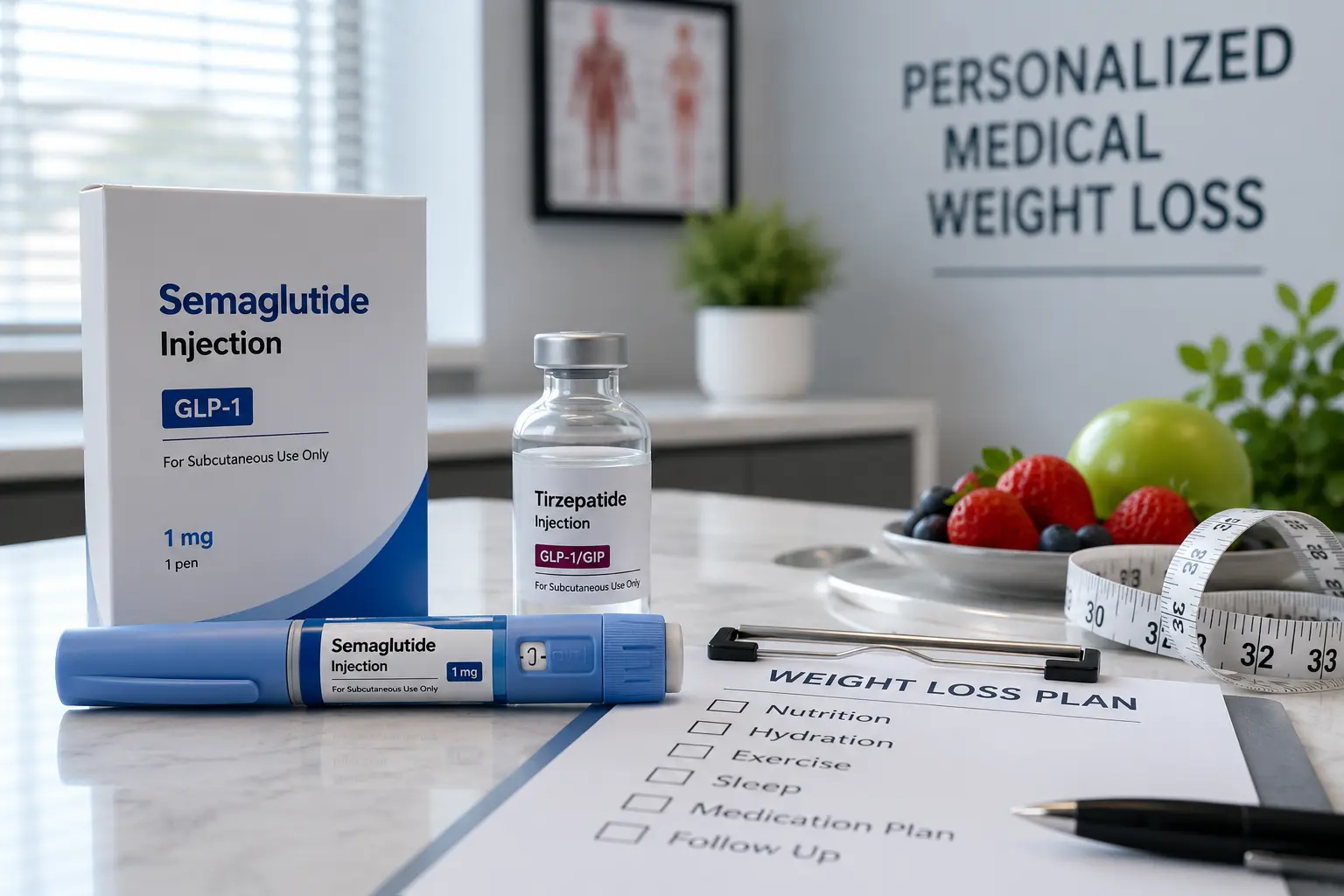
Weight loss injections are prescription medications administered by injection that may be used as part of a medical weight management plan for appropriate patients.
Some commonly discussed medications belong to a group called GLP-1 receptor agonists, while others work on more than one metabolic hormone pathway. Semaglutide and tirzepatide are examples of medications that may be considered in medical weight management, depending on a patient’s health history and clinical situation.
These medications do not replace healthy eating, physical activity, sleep, or other lifestyle habits. Instead, when appropriate, they may be used as one part of a broader treatment plan.
A medical weight loss program is different from simply purchasing an injection and using it without professional guidance. Your provider needs to consider factors such as your medical history, current medications, health conditions, treatment goals, and potential risks before determining whether a medication is suitable.
At AHWC, the goal is to help you understand your available options and build a plan around your individual needs.
The way an injectable weight loss medication works depends on the medication prescribed.
Some medications act on hormone pathways involved in appetite, food intake, blood sugar regulation, and digestion. These effects can influence hunger and fullness, which may make it easier for some appropriate patients to follow a reduced-calorie eating plan.
For example, GLP-1-based medications can affect appetite and feelings of fullness. Tirzepatide acts on both GLP-1 and GIP pathways.
The important point is that these medications are not simply “fat-burning shots.” Their effects are more complex, and they are intended to be used as part of an overall medical approach.
Your provider can explain how the recommended medication works, how it is administered, what side effects to watch for, and when to contact the practice with concerns.
Weight loss injections are not right for everyone, and results vary. For appropriate patients, medication may provide additional support when working toward weight management goals.
Some medications used for medical weight management affect appetite and fullness. This may help some patients manage hunger and make changes to their eating habits more manageable.
Instead of treating weight as a simple matter of willpower, a medical weight loss program considers your overall health, history, medications, lifestyle, and goals.
Medication works best within a broader plan. Nutrition, physical activity, sleep, stress management, and other habits can all play a role in long-term weight management.
Your needs can change during treatment. Follow-up allows your provider to discuss your progress, concerns, side effects, and next steps rather than leaving you to manage the process alone.
There is no single weight loss medication that is appropriate for every person. A personalized assessment can help determine whether an injectable medication makes sense for your situation or whether another approach may be more suitable.
The goal is not simply to start medication. It is to understand whether medical treatment can appropriately support the weight management goals you are working toward.
Whether weight loss medication is appropriate depends on your individual health and circumstances.
A provider may consider factors such as:
You should not assume that you are a candidate simply because a medication is popular or because someone you know has used it.
Certain health conditions, medications, pregnancy considerations, allergies, and previous reactions to medications can affect treatment decisions. Your provider should review these factors before recommending a prescription medication.
A consultation is the best place to ask whether weight loss injections may be appropriate for you and what alternatives are available if they are not.
Starting medical weight management should begin with a conversation, not simply an injection.
Your visit begins by discussing why you are seeking weight management support and what you hope to accomplish.
You may discuss your weight history, previous approaches, lifestyle habits, health concerns, medications, and questions about treatment.
This is also your opportunity to ask practical questions about injectable medications, potential side effects, costs, follow-up, and what ongoing care may involve.
Your provider reviews information that can help determine whether medical weight management is appropriate.
This assessment helps create a treatment plan based on your circumstances rather than using a one-size-fits-all approach.
If medication is appropriate, your provider can explain the available option, how it is used, what to expect, and how your progress will be monitored.
Not every patient will receive the same medication or treatment plan.
Your plan may also include nutrition and lifestyle recommendations designed to support healthier habits alongside medical treatment.
Weight management is an ongoing process. Follow-up visits provide an opportunity to discuss how you are responding to treatment, whether you are experiencing side effects, how your habits are changing, and whether the plan needs to be adjusted.
Your provider can also discuss longer-term maintenance if you reach a weight management goal.
Weight loss medications can cause side effects, and the specific risks depend on the medication you are prescribed.
Some commonly reported effects with GLP-1-based medications can include gastrointestinal symptoms such as nausea, vomiting, diarrhea, constipation, or abdominal discomfort.
That does not mean everyone will experience these effects, and side effects can vary from person to person.
Some symptoms may require medical attention. Your provider should explain the potential risks associated with your specific medication and tell you what symptoms should prompt a call to the office or urgent medical evaluation.
It is also important to tell your provider about other medications, supplements, health conditions, allergies, pregnancy or plans for pregnancy, and any previous medication reactions.
Do not change your dose, stop a prescription, or combine medications without guidance from the prescribing healthcare professional.
Medication can be helpful for some patients, but sustainable weight management involves more than an injection.
Your daily habits still matter.
Nutrition can influence your overall calorie intake and the quality of the food you eat. Physical activity can support fitness and overall health. Sleep and stress can also affect appetite, energy, and your ability to maintain healthy routines.
That is why medical weight management may be paired with nutrition and lifestyle coaching when appropriate.
The focus is on building habits that can continue beyond a short-term treatment period.
For patients who are already considering injectable medication, it can also be helpful to understand the difference between medication options. AHWC may discuss options such as semaglutide or tirzepatide when clinically appropriate, but the right choice depends on the individual patient rather than a single medication being best for everyone.
Choosing a weight management provider close to home can make ongoing care easier to fit into your routine.
For someone living in Alexandria, regular appointments may need to work around work, family responsibilities, exercise, meals, and everyday life. Patients in areas such as Old Town Alexandria, Del Ray, Rosemont, Potomac Yard, or Eisenhower East may value having medical weight management support within the community rather than treating the process as a one-time appointment.
The local setting also makes personalized care practical. Weight management is not something that should be reduced to a single number on a scale. Your provider can look at your goals, health history, lifestyle, and response to treatment as your plan develops.
If you are searching for weight loss injections near you, the most useful first step is not simply finding a place that offers injections. It is finding out whether medical treatment is appropriate for your circumstances and understanding what ongoing care would look like.
AHWC serves patients seeking personalized wellness and medical weight management support in Alexandria and surrounding Northern Virginia communities. If you are considering treatment, a consultation can give you a clearer understanding of your options.
Two people can have very different reasons for struggling with weight.
One person may be dealing with appetite challenges. Another may have a history of repeated weight loss and regain. Someone else may be managing medications, health conditions, work demands, or lifestyle factors that affect their ability to maintain healthy habits.
That is why a personalized approach matters.
A responsible medical weight loss plan should consider more than whether you want to lose weight. It should consider whether a particular medication is appropriate, what risks may apply, what lifestyle changes are realistic, and how your progress should be monitored.
Personalized care also gives you a place to discuss concerns openly.
You may want to know:
These are reasonable questions to bring to a consultation.
Starting treatment is only one part of weight management.
Some patients may eventually need to adjust their treatment plan based on their response, health changes, side effects, or personal goals. Others may need additional support with nutrition and lifestyle habits.
Long-term planning matters because maintaining progress can be different from initially losing weight.
If medication is part of your plan, your provider can discuss what ongoing treatment or maintenance may look like for you. The right approach will depend on your health, treatment response, and clinical needs.
The goal is to help you make informed decisions rather than promising a particular outcome.
A consultation may be useful if you have been trying to manage your weight and want to understand whether medical treatment could be an appropriate option.
You may also want professional guidance if you are unsure which treatment approach makes sense, have questions about injectable medications, or want a plan that combines medical care with nutrition and lifestyle changes.
You do not need to decide on a medication before your appointment.
The purpose of the consultation is to discuss your goals, review relevant health information, and determine what options may be appropriate for you.
If weight loss injections are not the right fit, your provider can discuss other approaches that may better match your needs.
Weight loss injections are prescription medications administered by injection that may be used as part of a medical weight management plan for appropriate patients. Some work through GLP-1 pathways, while others affect more than one metabolic hormone pathway.
No. Suitability depends on your medical history, current medications, health conditions, treatment goals, and other individual factors. A healthcare professional should determine whether a specific medication is appropriate.
Depending on the medication, injectable treatments may affect appetite, fullness, food intake, and metabolic pathways. These effects may help some appropriate patients follow a weight management plan.
The schedule depends on the specific medication and treatment plan. Your provider will explain how and when your prescribed medication should be used.
There is no guaranteed amount of weight loss. Response varies based on the medication, individual health factors, lifestyle, treatment adherence, and other circumstances. Your provider can discuss realistic expectations for your situation.
Side effects depend on the medication. Gastrointestinal symptoms such as nausea, diarrhea, constipation, vomiting, or abdominal discomfort can occur with some medications. Your provider should explain the risks specific to your treatment.
Yes. Medication is generally used as part of a broader weight management approach. Nutrition, physical activity, sleep, and other lifestyle habits remain important parts of supporting long-term health and weight management.
The total cost can depend on the medication, treatment plan, follow-up needs, and other factors. Because treatment is individualized, the best way to understand your expected cost is to discuss it with AHWC during your consultation.
You can still discuss other medical weight management options. Your provider can consider your goals and health information and help determine which approach may be appropriate.
For some patients, medical treatment may be part of longer-term weight management. The appropriate duration and maintenance plan depend on the medication, your response, health needs, and guidance from your healthcare professional.
If you are considering weight loss injections in Alexandria, VA, start with a conversation about your goals rather than choosing a medication on your own. Addis Health & Wellness Center can help you understand your available options, determine whether medical weight management may be appropriate, and discuss how nutrition and lifestyle support can fit into your plan.
Schedule a medical weight loss consultation in Alexandria, VA and take the first step toward a personalized approach to managing your weight.
$100 Off All Services
Stop guessing. Start with a free consultation at our Alexandria clinic — and let lab results and medical evaluation guide your program for once.
Medically supervised · Personalized plans · Alexandria, Arlington, Fairfax, Springfield
get in touch
Book Your Free
Consultation Today
Fill out the form and our team will reach out to schedule your free consultation. In-person or by phone — whichever works for you.
Fax: 703 520 5373
info@addishealthva.com
Address
6601 Little River Tnpk, Suite 420
Alexandria, VA 22312
Hours
Open 24 Hours (Monday - Sunday)
✦ $100 Off All Services
Mention this offer when you book your free consultation. Valid for all services at our Alexandria clinic. New patients welcome.
Confidential · No cost · Same-day appointments available